Rendering giant prehistoric animals with extensive hairy coats or thick feathery coverings is a convention now so well established within palaeoart that few of us give it a second thought. While this practise is well-grounded in fact for some cold-adapted Pleistocene megamammals, such as woolly mammoths and woolly rhinoceros, our treatment of other giant species - giant sloths and giant coelurosaurs - has a greater basis in tradition and expectation than fossil data. We have, after all, mostly lacked detailed insights into the skin of these giant extinct animals, and have thus relied on scraps of soft-tissues and phylogenetic bracketing to inform our art.
My artistic history firmly places me on the megafuzz bandwagon. Earlier this year I painted a shaggy
with more feather coverage than most modern birds (above). But I was recently given pause to question these reconstructions when Dennis Hansen, one of my excellent
, were largely or wholly devoid of hair because of issues with thermal energetics. At that size, wouldn't giant sloths be far too warm? This idea has been promoted by some sloth researchers (Fariña 2002, Fariña et al. 2013) but it's rare to see it expressed in palaeoart. Megasloths are, near-universally, restored with the same shaggy fuzz first given to them by
and it now seems shocking and wrong to see one without that characteristic pelt. Should you want to draw one, you have to fight your hand -
style - to force those strange, hairless contours onto the canvas.
When pondering this query I came to realise how little I really know about thermoregulation in large animals in general. By this, I don't mean the generalities of surface area:volume relationships, or different mechanisms of homeothermy: I'm talking about the preferred temperature ranges and ideal climatic conditions of large living endotherms. At what temperatures do species of a given size and shape start to feel hot or cold? How does that vary across clades, body shapes, and sizes? How sensitive are they to changes in ambient temperature? What difference does a coat of fur or feathers make to the thermal tolerance of a giant animal? This seems like a major hole in my knowledge as a palaeoartist, and I don't think I'm alone in not having a firm grounding in this topic. I gather from online conversations that most of us are shooting from the hip when putting fur, fluff and fat onto our reconstructions, applying what seems 'right' given the phylogenetic position and palaeoenvironment of our subject species, but without specific reference to models of thermal energetics, the temperature tolerances of analogous animals, or any other form of quantified data.
 |
| Tyrannosaurus rex: megafuzz edition, from 2016. This was pre-Bell et al. (2017), obviously. They were different times. |
So, for the last few weeks, I've been dipping into technical papers on this subject whenever I've had a spare few moments. I've found this a very useful exercise and encourage other palaeoartists to do the same. There's heaps of literature on the thermal energetics of endotherms and many enlightening, sometimes surprising results to ponder. While this exercise does not address the many unknowns of extinct animal physiology that are essential to understanding their strategies for thermoregulation or heat dissipation (e.g. metabolic rate, activity level, conductivity of skin etc.) it makes for an excellent palaeoart 'calibrating activity' or reality check. After all, if we don't know, in a measured and quantified sense, how size influences the thermal tolerances and integument of living animals, how can we be expected to make credible reconstructions of their fossil relatives?
Into the Thermal Neutral Zone
There are several different concepts we can use to investigate thermal energetics. One of the most enlightening and useful mechanisms is
thermal neutrality. Endothermic organisms are thermally neutral when their environment is warm enough that their Basal Metabolic Rate (BMR) is sufficient to maintain their core temperature without additional energetic investment or water loss. This can be given as a single value, which represents the thermal neutral temperature for a specific configuration (e.g. a certain pose and hair or feather arrangement etc.) or it might be given as a range - a
Thermal Neutral Zone (TNZ). We define the TNZ as the temperatures at which very minor adjustments to an animal's posture or integument control core temperature rather than changes to BME. While the TNZ does not exactly equate to an animal's thermal 'comfort zone' (Kingma et al. 2014) this is also not the worst layman's summary of the term: if an animal has to invest more than minimal energy to maintain a steady core temperature (e.g. exposing a heat-radiating body part, or altering insulation depth by raising/lowering hair or feathers), it's outside the TNZ.
 |
| Principles of the Thermal Neutral Zone. This graph is based on an excellent diagram included in this lecture, but I've been unable to find the original source. |
The TNZ is bounded by two thresholds, Lower and Upper Critical Temperatures (LCT and UCT, respectively - see diagram, above). These are the ambient temperatures at which an animal has to take action (e.g. invest energy above BMR) to keep itself at a desired core temperature. Below the LCT, animals use energy to keep warm (e.g. by shivering or exercising), while exceeding UCT instigates cooling responses, such as seeking water, sweating or panting. Some species are well adapted for survival outside of their TNZ, or are capable of tolerating huge temperature fluctuations without changes to BME. Others are specialised to live in a narrow ambient temperature band and react inefficiently when subjected to cooler or warmer conditions.
What's neat about the principle of thermal neutrality is that it allows us to explore the effects of body size, metabolism, insulation and temperature in a quantified manner. Thermal neutrality is applied widely to all manner of biological studies: just a few applications include animal husbandry, understanding animal responses to climate change, and the evolution of organismal physiology. For our purposes, it's helpful that well-established scaling trends have been recognised from studies of endotherm thermal neutrality. They're based on pretty fundamental physical factors such as animal mass, ambient temperatures, animal core temperature, and skin conductivity, so we can be pretty confident that they should apply to fossil endotherms too.
Generally speaking, the smaller the animal, the closer their thermal neutral temperature is to core temperature. Small animals have narrow TNZs, higher LCTs, and - owing to their lessened thermal inertia - sharper increases in metabolic rate when ambient temperature takes them away from thermoneutrality. These facts describe the well-known phenomena of small animals generally being more concerned with staying warm than keeping cool. The inverse is true for large animals, which have broader TNZs, lower LCTs, and lower metabolic costs to warm themselves below LCT: in other words, they're less sensitive to cool temperatures.
Whatever size an animal is, excessive heat is more dangerous than excessive cold. Endotherms can tolerate ambient temperatures much lower than their LCT before reaching dangerous levels, but their tolerance to temperatures above UCT is much lower: just a fraction of their potential LTC response range. While a cold animal can generate a lot of additional heat from exercise and increased metabolic rates, hot animals have to rely on raw physical processes - conduction, radiation, evaporation and convection - to cool down. We can only enhance these processes so much and, as most endotherms run within 3-6°C of critically high core temperatures, we have a low margin for error when exposed to very high temperatures. An organism's thermal neutrality is not fixed, and can be altered by anything which affects heat production and loss (e.g. wetting the skin, humidity, air movement), so we have to consider a range of environmental factors, not just temperature, when discussing this concept.
 |
| My very conventional take on Megatherium, a four-tonne sloth restored almost exclusively as extensively hairy since the mid-1800s. I feel safe and cozy with this image, and the idea of hairless megasloths is downright weird to me. Good job I've not tried to draw one or anything. |
Values of thermal neutrality have been reported for numerous animals, including humans. A lot these stem from research into livestock welfare, wherein farmers and breeders need to know what temperatures their animals are comfortable in (for an extensive summary, see the 1981 findings of the National Research Council). Thus, the TNZs of horses, cows, sheep, chickens and so on are well documented and easy to find outside of technical literature. A complication to these figures is that they often lack details such as animal weight, breed, and environmental specifics, so they are - at best - a rough introduction to livestock TNZs. Nevertheless, these are useful species to discuss because they're so familiar to us, and I've attempted to summarise representative values from several sources here.
Unsurprisingly, smaller animals like chickens (c. 2 kg) feel the cold relatively easily and have a relatively high and narrow TNZ of c. 18-23°C. A freshly hatched chick has an LCT of 34°C. Larger birds, like emus (on average, 30 -40 kg), have a lower LCT of 10°C (Maloney 2008). Dairy cattle (450-800 kg) are less sensitive to temperature changes, with a TNZ of 5-25°C, though some dairy cows are reported as having LCTs of -15°C. This range seems to apply to certain beef cattle breeds as well, though not all: some (presumably smaller and leaner?) have LCTs of c. 10°C. Horses have a TNZ of 5–25°C (Morgan 1998), although they can reportedly tolerate freezing temperatures comfortably with unshorn hair. Cattle with full, dry winter coats can also tolerate freezing temperatures, down to -7°C. Animal condition and food intake are important variables: well-fed animals with access to food have lower LCTs than those that are fasting. For cattle, the difference between fasting and full-feed equates to a 19°C difference in LCT, from -1°C in full-feed to 18°C in fasting (National Research Council, 1981).
Naked humans are thermally neutral around 27°C, making us - perhaps counterintuitively - most comparable to the smaller species mentioned above. This relatively high temperature reflects both our long-term hominid reliance on clothing as well as our ancestral climate. Habitat and climates influence the temperature tolerances of endothermic animals in terms of both short-term acclimatisation and longer-term adaptation (Scholander et al. 1950; Scholander 1955). Arctic animals have amazingly broad TNZs of many tens of degrees. Resting arctic foxes, for example, show little change in BME whether they are in 30°C or below -30°C. They achieve this by mixing high-performing insulation around their bodies with thinner insulation on their extremities so that, by simply changing posture, they create an 11-fold difference in heat retention or loss. Tropical animals - which includes human ancestors - have relatively narrow zones of thermal neutrality and begin to feel cold when exposed to temperatures of even 25°C. They also respond more energetically to changes in temperature, raising their metabolic rates far quicker, relative to temperature change, than their polar equivalents. The bodies of tropical species can be seen as specialised for continuous high temperatures, while those of colder climates are adapted to deal with extreme fluctuations in daily conditions.
The impact of integument and body shape on TNZ
Data are also available regarding the impact of insulating tissues - fur, fat, feathers etc. - on animal heat loss. One very familiar source on this topic are sheep in their fleeced and shorn state. The National Research Council (1981) reports that a sheep with a 10 cm thick fleece has a LCT of -120°C(!), but this lowers to -15°C when the fleece is trimmed to 7 mm. That's a remarkable change in temperature tolerance, and shows the enormous impact that integument thickness has on animal energetics. In a wet, windy setting, that LCT of our 7 mm fleece sheep raises even more, to 13°C.
We can also explore the scaling effects of adding insulation using digital models. Calculating TNZ at various animal sizes and body shapes, and both with and without a standardised insulation, shows that insulating layers have increasing impacts on TNZ at large size (Porter and Kearney 2009). The addition of insulation only lowers the LCT of very small animals (e.g. rodent, microbat or songbird sized) a few degrees, but LCT drops exponentially quicker in larger animals. Applying the same grade of insulation to a one tonne animal lowers LCT by about 65°C, from ~25°C in a naked-skinned animal to below -40°C in a fuzzy one. Again, I have to remark on how big that shift is: this is the sort of difference that could adapt a species to a whole new biome.
 |
| The impact of insulation, body shape and wind speed on LCT values in endotherms. Note how LCT generally falls with increased body size, but how the introduction of insulation compounds this effect dramatically. From Porter and Kearney (2009). |
Porter and Kearney (2009) also show that changes in body shape - which could reflect either different anatomical bauplans or changes in posture - have an impact on LCT values too. Unsurprisingly, longer and thinner animals have higher LCTs than more compact animals, but the impact of increasing surface area becomes less pronounced at large size, and any impact they have is vastly overshadowed by the addition of insulation. This is an important point for those of us thinking that the body shapes of extinct animals might allow for fibres and fluff at larger sizes than we'd predict from living animals. Yes, body shape has an influence, but perhaps not as much as we intuitively expect, and with less and less impact as animals scale to gigantic proportions.
Thermal neutrality in giant animals
One frustration of current literature on thermal neutrality is a lack of specific data on our largest living species, such as rhinos and elephants. Though some literature discusses the TNZs of these species, I was unable to find their LCT and UCT values. Nevertheless, a wealth of studies have been performed into the thermoregulation of elephants that give hints about where their TNZ might lie. This research has been catalysed by both simple scientific curiosity as well as concern for zoo elephants in climates far removed from their naturally hot ranges in Asia and Africa. Elephants provide some of our best insights into the thermoregulatory challenges facing large extinct land animals, but these data come with important caveats. As discussed in my
post on indricotheres, elephants have thermoregulatory issues beyond simply being huge: they are unusually compact, live in climates which are routinely warmer than their core temperature, and they cannot sweat or pant (Myhrvold et al. 2012). They still provide useful insights into the issues of maintaining a steady internal temperature at multi-tonne masses, but they are probably not biologically 'typical' giant animals.
Elephants are noted for tolerating a wide range of temperatures in their natural habitats, from sweltering daytime heat of over 40°C to overnight cools of freezing or sub-freezing temperatures. Their size and thermal inertia permits them to endure freezing nights without issue and, in discussions about the controversial subject of keeping zoo elephants in cooler climates, their handlers often suggest they are happy in snowy and icy conditions, at least for short periods, provided they can keep active. It seems one of the biggest problems elephants face in freezing temperatures is frostbite on their ears and trunks, not the cold itself. This probably indicates a very low LCT (close to or below freezing) for elephants, which is what we'd expect from the scaling trends outlined above. Estimates of thermal neutrality in multi-tonne fossil species (see below) point to similar values.
 |
| Desert elephants, such as these Namibian bush elephants, are specialised populations adapted to life in extreme heat and aridity. They have several anatomical adaptations to desert life - some specifically influencing their thermal energetics (smaller bodies, longer legs) - and avoid extensive exercise during the day, especially in warmer seasons, to avoid risk of hyperthermia. Their nomadic lifestyle is mostly achieved by long walks at night, not during the day. Image by Ron Knight, from Wikimedia, CC-BY-2.0. |
Elephants may also spend a lot of time at or above their UCT, reflecting their struggles with heat dissipation. Monitoring elephant body temperatures during moderate exercise (walking) in a range of weather conditions (averaging 8 to 35°C) shows that their tissues accumulate heat 2.2 - 5.3 faster than it can be dissipated, depending on conditions (Rowe et al. 2013). This is in part because very large animals have a thick thermal boundary layer - a region of air adjacent to the skin which is warmed by heat radiating from their bodies. Larger animals effectively carry their own warm microclimate wherever they go, and face the challenge of trying to shed heat through it. This, combined with the heat produced by large-scale muscle activity, means exercise can be thermally stressful to elephants, especially in hot, windless conditions. Rowe et al. (2013) predict that four hours of continuous walking in very warm conditions would be fatal to an elephant, perhaps explaining why elephants living in their natural, warm habitats limit their daily exercise, routinely seek shade and water, and are often more active at night. Elephants spend much of their lives with internal temperatures close to the critical mammalian limit, even tolerating extended periods of near-lethal hyperthermia, to the extent that climate change may push wild elephants over the edge of their adaptive capacity to endure elevated temperatures. They are not entirely alone in this: other large mammals of very warm tropical settings - such as rhinoceros - also employ elephant-like behavioural adaptations when faced with high ambient temperatures. Rhinoceros have a more conventional mammalian capacity to deal with heat - they can pant and sweat - and yet they still seek shade and water during hot periods (Rowe et al. 2013). We have to view the thermal stresses faced by multi-tonne animals as defining physiological and behavioural factors in their lives, and as major selection pressures on their anatomy.
Thermal energetics in extinct giants
Having just learned a little about thermal neutrality in living species, can we make some broad predictions about the energetics of extinct giants? Many researchers have applied these principles to fossil animals and their findings are in line with the general points made above: there are strong indications that extinct giants - seemingly regardless of metabolic rate - had major issues with heat loss. It's quite reasonable to assume that this could have influenced aspects of their anatomy and appearance.
One such study is the article which catalysed this blog post: Richard Fariña's (2002) estimates of giant sloth thermoneutrality, with a strong focus on
Megatherium*. Fariña (2002, later summarised by Fariña et al. 2013) calculated that a hairless 4-tonne sloth with a typical placental metabolism would be thermally neutral at -17°C. As a mid-latitude creature living in a semi-arid temperate climate (Bargo et al. 2001), this result paints
Megatherium as having elephant-like issues with staying cool. The environments inhabited by
Megatherium are similar to those of modern northern Patagonia, and thus rarely, if ever, dropped to -17°C, and we have to wonder if the shaggy pelt traditionally applied to
Megatherium would be cooking an already very warm animal. Given the arid settings inhabited by this sloth, water loss through panting would soon become a major problem for a heat-stressed
Megatherium. We must also consider that a similarly sized-sloth,
Eremotherium, lived in tropical temperatures in what is now Florida: if it had a similar thermal neutrality to
Megatherium (which it almost certainly did),
Eremotherium must have been pretty hot and bothered most of the time, even if it largely or wholly lacked fur.
*It's worth stressing that, contrary to popular belief, we do not have any skin preserved from megasloths: all the skin specimens we have stem from smaller ground sloth species.
 |
| Here's your reminder that I'm posting this on Halloween 2019: behold the horror of a near hairless ground sloth. A century and a half of seeing giant sloths with long, shaggy hair makes images like this hard to swallow, but there's a legitimate scientific case to be made for megasloths looking like this. We need to be careful that we don't let tradition and expectation blind us to what might be a more tenable hypothesis of life appearance. |
Modern sloths, of course, have an unusually slow metabolism, and it's appropriate to ask how much that might affect thermal neutrality of their giant cousins. Fariña (2002) calculated that halving the metabolism of a naked
Megatherium leads to thermoneutrality at 10°C, a figure comparable to animals that inhabit temperate settings today without the need for long, shaggy fur. This being so, perhaps mass alone might have been enough to keep
Megathium warm, even if it had an unprecedentedly low metabolic rate for a mammal.
Fariña (2002) also computed the thermoneutrality of a two tonne
Mylodon darwinii in both naked and shaggy configurations. His estimates give thermal neutrality at -4°C without fur, and -28°C once a 4 cm thick hairy covering was applied. This matches expectations that fur makes a large difference to the thermal neutrality of large animals and also implies that, even without hair,
Mylodon was pretty cold tolerant. Of course, fossil evidence shows that
Mylodon was hairy, suggesting that we have a species adapted for dealing with extreme cold. This seems sensible given what we know of ground sloth distribution.
Mylodon lived much further south than
Megatherium, at the southern tip of South America, and also at high altitude. Unlike
Megatherium, it would have routinely experienced sub-freezing temperatures and probably needed extra insulation to survive harsh winters. There's more work to do with Fariña's sloth calculations (both his 2002 and 2013 contributions to this topic are short and don't play with as many variables as I'd like) but these results are certainly thought-provoking as goes our considerations of the life appearance of sloths, and perhaps other giant extinct animals too.
Turning our attention now to extinct giant reptiles: I'm not aware of any studies that calculate thermal neutrality for large dinosaurs, but the sort of figures suggested for multi-tonne sloths are probably reasonable assumptions if we assume a mammal-like metabolic rate. Some vindication of this stems from studies suggesting that large dinosaurs had elephant-like issues with overheating. Rowe et al. (2013) questioned how long it would take a 3655 kg
Edmontosaurus to overheat with continuous exercise and, even though their model assumed a sub-mammalian metabolic rate, just 3.5 (endothermic) or 4 (ectothermic) hours of walking in daytime temperatures typical to mid-latitude Late Cretaceous settings would elevate
Edmontosaurus core temperatures to lethal levels. They suggested that, like large mammals, giant dinosaurs might have relied on panting, finding shade and water, resting during the warmest parts of the day, and nocturnal behaviour to avoid heat stress.
 |
| How quickly would it take for Edmontosaurus to overheat when subjected to low-grade exercise during the daytime? Not that long, despite it not being the largest dinosaur, nor the most insulated. What might this graph look like for a hypothetical larger, fluffier dinosaur living in the same habitat? Modified from Rowe et al. (2013). |
This is some major food for thought given that the
Edmontosaurus model of Rowe et al. (2013) lacks an insulating skin cover and is considerably smaller than some dinosaurs we routinely coat with thick layers of fluff. If 3-4 tonne scaly dinosaurs were already experiencing elephant-grade issues with heat build up during exercise, surely 6 tonne coelurosaurs living in the same climates would experience similar issues, even if only covered in scales? Everything we understand about the scaling of thermal energetics suggests that heat retention problems would get worse, not better, in larger animals, and it might be unrealistic to assume coelurosaurs twice the mass (or more) of
Edmontosaurus were comfortable wandering around with a thick, insulating blanket of feathers.
Would body shape - such as having a dinosaurian-grade long necks and tails - have helped avoid the issues of heat retention? Seemingly not. Don Henderson’s (2013) models of sauropod thermoregulation found that skin area does not scale rapidly enough with increased body size, even with proportionally long necks and tails, to effectively cool their bodies. Sauropods are probably our best bet for dinosaurs using body shape to dump unwanted heat and, if even their skin area can't keep pace with internal heat production, other dinosaurs were unlikely to have managed either. This seems to match expectations from Porter and Kearney (2009) that elongate body shapes affect thermal neutrality, but that the effects of elevated body mass are difficult to circumvent.
 |
| Although some of the most extreme neck and tail proportions exist in the largest sauropods, such as Dreadnoughtus, these anatomies do not augment their surface area enough to counter the increase in bulk and heat production associated with gigantic body scaling. If sauropods - animals famously observed as being thin at one end, much much thicker in the middle and then thin again at the far end by A. Elk (1972) - couldn't rely on their necks and tails for this task, other dinosaurs likely couldn't either. |
We needn't just rely on equations and computer models for evidence of high heat loads in large dinosaurs: we also have direct fossil evidence suggesting them. Brand new research by Ruger Porter and Lawrence Witmer (2019) has noted that large dinosaurs had enhanced vascularity in their skulls related to shedding heat. Like other reptiles, dinosaurs likely used panting and cooling sinuses in their heads to radiate heat, and they seem to have increasingly relied on these mechanisms at large size. Porter and Witmer's study shows a strong correlation between body size and development of these cranial cooling mechanisms in all three major dinosaur groups, suggesting that superior cooling anatomy was acquired independently in large-bodied dinosaurs regardless of the body shapes or integuments common to their clades.
We can also - perhaps more controversially - look at our current understanding of dinosaur skin as matching expectations of thermal energetics. And yes yes yes, our data here is less than perfect, taphonomic issues abound and we still have large gaps in our understanding of dinosaur skin. But it's nevertheless interesting that - as I write this in October 2019 - we're still finding indications of scales in virtually all dinosaurs above the 1.5 tonne mark ("the Yutyrannus threshold") regardless of whether that group is phylogenetically likely to sport fibres or not. We typically consider coelurosaurs in this context (e.g. Bell et al. 2017) but perhaps we should also consider ornithischians as evidence of this relationship too. At least some smaller ornithischians were covered in fuzz (e.g. Godefroit et al. 2014) but scales dominate in all sampled multi-tonne species. So yes, while our dataset of dinosaur skin configurations might just reflect a number of preservational and taphonomic factors, we have to be open to the possibility that we're actually seeing how dinosaurs adapted to large size. It's also worth stressing that, given estimates of thermal energetics in large extinct animals, an extensively fuzzy giant dinosaur would actually be pretty surprising.
 |
| We don't discuss it much, but the well-documented scaly hides of large ornithischians, such as Triceratops, might represent the same thermal responses postulated to explain the presence of scales in large theropods. We need a lot more data on the skin of smaller ornithischians to test this, but it's a hypothesis consistent with our understanding of heat retention in animal scaling. |
A response to this last paragraph might be that certain Mesozoic settings were actually a lot colder than we generally assume, and that maybe even large dinosaurs needed extra insulation to stay warm. While this argument has some merit, we need to be careful not to overstate how cold these settings were, as well as consider some of the temperature values associated with thermoneutrality in very large species. It's true that the Mesozoic was not the global tropical hothouse we once assumed it was, but temperatures were still generally warmer than today. Many so-called 'cold' Mesozoic climates would be quite tolerable to modern temperate species. Maastrichtian Mongolia, for instance, which many artists are now populating with woolly
Deinocheirus, shaggy
Therizinosaurus and fuzzy
Tarbosaurus, had mean annual temperatures between 5-10°C and a climate similar to Shijiazhuang, northeastern China (Owocki et al. 2019). This predicts average daily temperatures above 10°C for most of the year but only a month or so of average daily temperatures around freezing. It seems doubtful to me, given what's outlined above about the thermal energetics of 3-4 tonne animals, that six-tonne (or more) coelurosaurs would need thick, full body insulation to live in this climate. To the contrary, modern cattle or horses could have lived in these settings without discomfort. Similar statements can be made about Maastrichtian Alaska, which was cold in the winter, but lacked sustained freezing temperatures (Spicer and Herman 2010). If two-tonne animals are thermally neutral at c. -4°C (Fariña 2002), the 2-4 tonne hadrosaurs and ceratopsids of these habitats might have survived untroubled by the winter months without needing extra insulation.
 |
| Yet more art of extensively fuzzed large dinosaurs, which I once assumed would be sensible given the cold temperatures of Maastrichtian Alaska. Given everything outlined here, I'm now looking at these Pachyrhinosaurus from 2015 as being over-insulated for their chilly, but not deeply-cold habitat. |
We thus have to be careful not to get carried away when we hear that palaeotemperatures of a given ancient setting have been revised down. A "cool" Mesozoic climate has yet to equate to modern-grade tundra or polar desert, and we needn't start restoring animals as looking suited to such habitats. It also pays to remember that most Mesozoic climates were warmer, sometimes significantly warmer, than these cooler examples. O'Connor and Dodson (1999) suggest that a modern elephant dropped into the climates of Late Cretaceous North America would experience the same issues, or worse, with overheating as they do today. This being the case, perhaps a lot of big dinosaurs spent much of their lives feeling pretty darn warm.
So... about those giant shaggy coelurosaurs and sloths...
Let's bring this long article into land by returning to our original question: how likely is it that giant fossil animals, such as giant sloths and giant coelurosaurs, were covered in extensive fuzz for the purpose of insulation? To me, our discussion of the thermal energetics, heat production and dissipation, and data from the fossil record suggest a few key takehomes:
- Animals do not need to be gigantic nor super shaggy to be tolerant of cool temperatures. Species weighing several hundred kilogrammes, and with only moderate insulation, are thermally neutral at temperatures approaching freezing, and those that exceed a tonne or so have TNZs extending below 0°C. Simply being large is a very effective way to stay warm, regardless of body shape or phylogenetic affinity.
- Near-naked multi-tonne animals struggle to shed body heat even in cool conditions because, when engaged in any activity, they generate more heat than they can easily lose. Hypothetical structures that would inhibit heat loss further - such as thick fur or feathers - seem maladaptive and unlikely for such species.
- We seem to lack data on the thermal energetics of the very largest fossil land animals, but there's no reason to think they would have escaped the the challenges of heat dissipation outlined above. If anything, these issues would be more far more pronounced than that of the taxa discussed in this post, on account of their increased body mass.
These points considered, perhaps reconstructions of large animals that have jettisoned most or all of their fibrous integuments are viable interpretations of fossil giants, regardless of their ancestral integument. I stress "most or all" fibres because, of course, we also have data suggesting that sparse, short fibres can help negate thermal boundary issues (Myhrvold et al. 2012), and there's no reason to assume this wouldn't apply to giant sloths, indricotheres, coelurosaurs etc.
I'm certainly now looking at some of my own portfolio with new eyes. I find it hard to believe that my super-fluffy
Therizinosaurus,
Pachyrhinosaurus and even my traditionally hairy
Megatherium aren't sweltering to death under all their fluff. Fariña's naked sloths might be weird and scary to us after centuries of depicting them with shaggy fur, but - so far as I can tell - his ideas fit our understanding of animal energetics and
Megatherium habitat far better than the established model. It's worth remembering that a counter case for
Megatherium requiring extensive hair has never been made, and that our standard reconstruction is, from the perspective of basic physics, actually far more outlandish than the seemingly radical Fariña model. It may seem shocking, but the case for a hairy
Megatherium is less developed than the case for a hairless one.
 |
| Putting my artistic money where my mouth is, here's the giant, six-tonne ornithomimosaur Deinocheirus restored with just a sparse, localised set of filaments around the head, shoulders and tail tip. After researching this article, images like this read as more plausible to me than the general 'walking haystack' guise Deinocheirus has attained in palaeoart. |
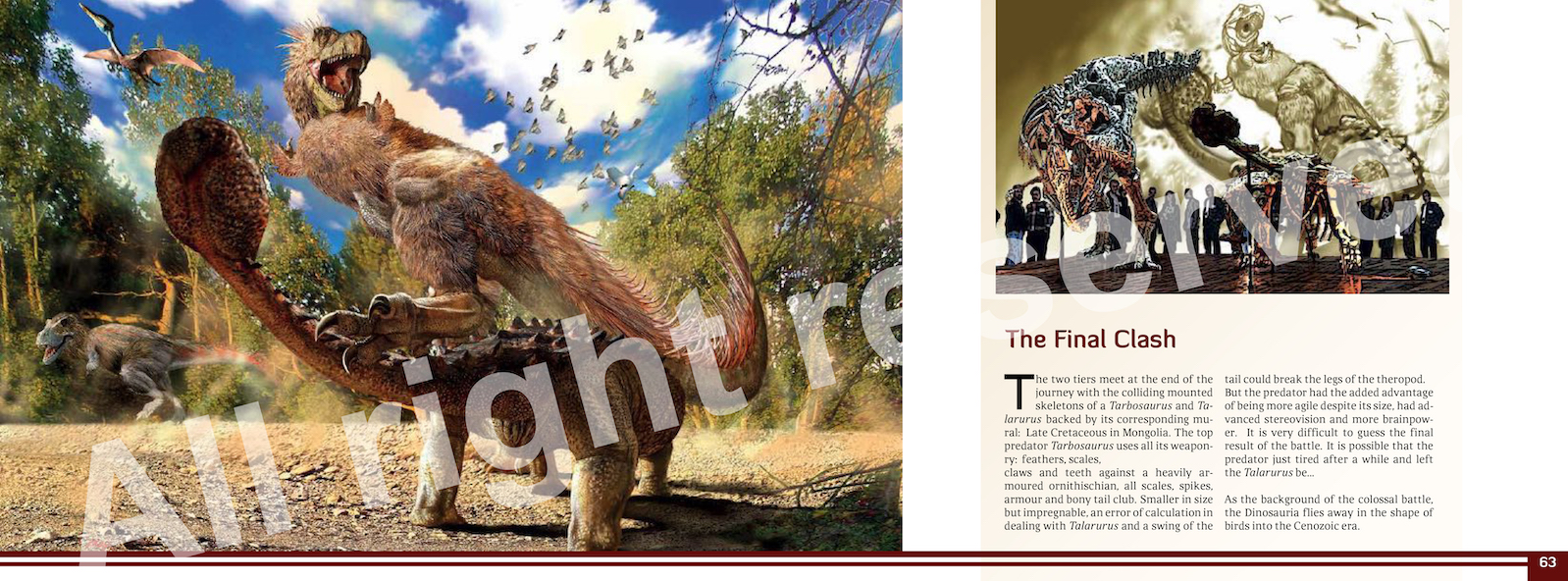
And yes, we might want to apply the same caution to giant coelurosaurs, even species we're used to clothing in extensive fuzz such as therizinosaurs and deinocheirids. Perhaps even the 'feather capes' we sometimes drape on giant tyrannosaurids are thermal overkill.
Tyrannosaurus and similarly-sized tyrants are as large or bigger than living elephants, and it seems unlikely to me that animals of this size, mostly living in temperate or subtropical climates, needed even a small feather blanket to keep them warm. Our reconstructions of these animals which lean towards mammoth-like pelts seem especially untenable, given the impacts that even light feather coats would have had to species of their size. This does not rule out sparse fibres for heat loss or display of course, but a thick, shaggy pelt would surely be stifling - maybe even dangerously warm - given their body mass and the temperatures they experienced.
I'm aware that the argument I've presented here is a very broad brush, 'woods for trees' approach to this topic. I don't doubt that there are nuances and details to get into, and that there are many questions left to answer. For instance, what about the role of air sacs in dinosaurian cooling? What about climates which have high precipitation rates or strong winds? These are good points worthy of exploring, but - without wishing to add lots more detail to this already long article - I wonder if they're going to overturn the general arguments outlined here. With all indications being that giant animals are thermally neutral at very low temperatures, and that body mass seems to be the dominant effect on thermal neutrality, we're asking a lot of these additional factors to overturn the points made above. Note, for example, how Porter and Kearney's (2009, also above) assessment of wind speed on LCT follows the general trend of larger animals being less affected than smaller ones, and how it has very little impact on LCT for the largest animal in their study. We should assume even lesser impact in gigantic species.
I'm expecting a certain amount of harrumphing about this article from some quarters, especially from those who - like me - quite like seeing big, shaggy animals in palaeoart. They look cool, give off that 'new palaeo' vibe and provide us with lots of fun and exciting looks to explore. But, of course, palaeoart isn't really about what we
like, it's about creating tenable, data-compliant takes on fossil species. So I'm going to end this article with a request: for those of us who want to continue restoring giant fossil animals with thick layers of hair and feathers, we need to demonstrate how the data presented here is wrong, and to the same calibre as the cited studies. What large modern animals deviate from well-established energetic scaling trends? What models of extinct animal physiology show that multi-tonne animals were immune to expected issues of thermal storage and heat dissipation? What are the flaws in papers arguing for low thermal neutrality in giant endotherms? Such a discussion would at least give us some actual data, and not just arm waving and intuition, to make predictions about how much fuzz extinct giant animals actually had. It's our job, after all, to ensure that the fluff in our palaeoart is kept on the bodies of our carefully researched restoration subjects, and isn't also a description of our approach to research.
Enjoy monthly insights into palaeoart, fossil animal biology and occasional reviews of palaeo media? Support this blog for $1 a month and get free stuff!
This blog is sponsored through
Patreon, the site where you can help online content creators make a living. If you enjoy my content, please consider donating $1 a month to help fund my work. $1 might seem a meaningless amount, but if every reader pitched that amount I could work on these articles and their artwork full time. In return, you'll get access to my exclusive
Patreon content: regular updates on upcoming books, papers, painting and exhibitions. Plus, you get free stuff - prints, high-quality images for printing, books, competitions - as my way of thanking you for your support. As always, huge thanks to everyone who already sponsors my work!
References
- Bell, P. R., Campione, N. E., Persons IV, W. S., Currie, P. J., Larson, P. L., Tanke, D. H., & Bakker, R. T. (2017). Tyrannosauroid integument reveals conflicting patterns of gigantism and feather evolution. Biology letters, 13(6), 20170092.
- Fariña, R. A. (2002). Megatherium, the hairless: appearance of the great Quaternary sloths (Mammalia; Xenarthra). Ameghiniana, 39(2), 241-244.
- Fariña, R. A., Vizcaíno, S. F., & De Iuliis, G. (2013). Megafauna: giant beasts of pleistocene South America. Indiana University Press.
- Godefroit, P., Sinitsa, S. M., Dhouailly, D., Bolotsky, Y. L., Sizov, A. V., McNamara, M. E., ... & Spagna, P. (2014). A Jurassic ornithischian dinosaur from Siberia with both feathers and scales. Science, 345(6195), 451-455.
- Henderson, D. M. (2013). Sauropod necks: are they really for heat loss?. PloS one, 8(10), e77108.
- Kingma, B. R., Frijns, A. J., Schellen, L., & van Marken Lichtenbelt, W. D. (2014). Beyond the classic thermoneutral zone: including thermal comfort. Temperature, 1(2), 142-149.
- Maloney, S. K. (2008). Thermoregulation in ratites: a review. Australian Journal of Experimental Agriculture, 48(10), 1293-1301.
- Morgan, K. (1998). Thermoneutral zone and critical temperatures of horses. Journal of Thermal Biology, 23(1), 59-61.
- Myhrvold, C. L., Stone, H. A., & Bou-Zeid, E. (2012). What is the use of elephant hair? PLoS One, 7(10), e47018.
- National Research Council. (1981). Effect of environment on nutrient requirements of domestic animals. National Academies Press.
- O'Connor, M. P., & Dodson, P. (1999). Biophysical constraints on the thermal ecology of dinosaurs. Paleobiology, 25(3), 341-368.
- Owocki, K., Kremer, B., Cotte, M., & Bocherens, H. (2019). Diet preferences and climate inferred from oxygen and carbon isotopes of tooth enamel of Tarbosaurus bataar (Nemegt Formation, Upper Cretaceous, Mongolia). Palaeogeography, Palaeoclimatology, Palaeoecology, 109190.
- Porter, W. P., & Kearney, M. (2009). Size, shape, and the thermal niche of endotherms. Proceedings of the National Academy of Sciences, 106, 19666-19672.
- Porter, W. R., & Witmer, L. M. (2019). Vascular Patterns in the Heads of Dinosaurs: Evidence for Blood Vessels, Sites of Thermal Exchange, and Their Role in Physiological Thermoregulatory Strategies. The Anatomical Record. In press.
- Rowe, M. F., Bakken, G. S., Ratliff, J. J., & Langman, V. A. (2013). Heat storage in Asian elephants during submaximal exercise: behavioral regulation of thermoregulatory constraints on activity in endothermic gigantotherms. Journal of Experimental Biology, 216(10), 1774-1785.
- Scholander, P. F. (1955). Evolution of climatic adaptation in homeotherms. Evolution, 9(1), 15-26.
- Scholander, P. F., Hock, R., Walters, V., Johnson, F., & Irving, L. (1950). Heat regulation in some arctic and tropical mammals and birds. The Biological Bulletin, 99(2), 237-258.
- Spicer, R. A. and Herman, A. B. 2010. The Late Cretaceous environment of the Arctic: A quantitative reassessment based on plant fossils. Palaeogeography, Palaeoclimatology, Palaeoecology, 295, 423–442.